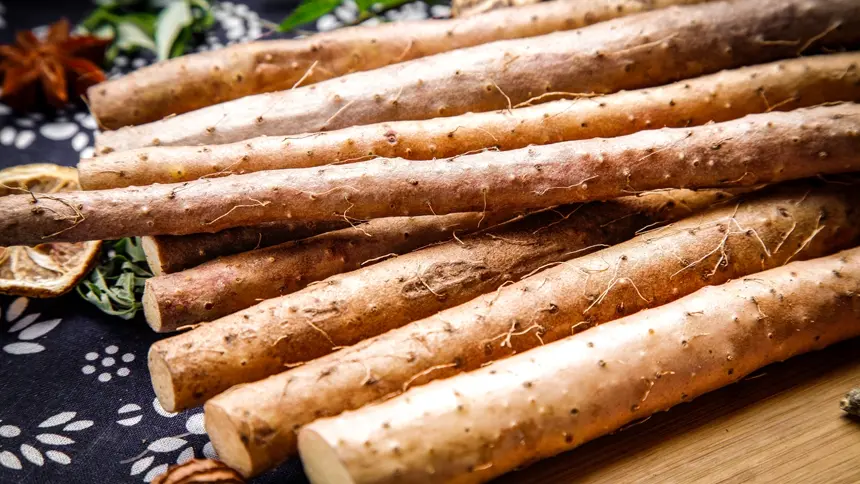
🧬 Nutritional Components of Yam
Yam is rich in essential nutrients required for children’s growth and development, including:
Amylase: Helps break down starches in food, promoting digestion and absorption, especially suitable for children with immature digestive systems.
Mucilage Protein: Forms a protective layer in the digestive tract, reducing irritation from pathogens and enhancing immunity.
Dietary Fiber: Contains 2.4g of dietary fiber per 100g, aiding in relieving constipation and promoting gut health in children.
Vitamin C: Assists in collagen synthesis and iron absorption, preventing symptoms like bleeding gums.
Potassium: Helps maintain heart muscle function and nerve transmission, preventing electrolyte imbalances.
👶 Health Benefits of Yam for Children
Promotes Digestion: The amylase and polyphenol oxidase in yam aid in breaking down food, promoting digestion and absorption, suitable for children with poor appetite or indigestion.
Boosts Immunity: Mucilage protein enhances the defense of respiratory mucosa, reducing the risk of infections.
Supports Growth and Development: Rich in proteins, vitamins, and minerals, yam supports the development of children’s bones and muscles.
Enhances Memory: Contains abundant choline and lecithin, which help improve children’s memory and learning abilities.
🍽️ Recommendations for Children’s Yam Consumption
Consumption Methods: Yam can be prepared as yam puree, porridge, or pancakes, making it easy for children to chew and digest.
Pairing Suggestions: Pairing yam with millet, red dates, or lotus seeds provides a more comprehensive nutrition, aiding in spleen and stomach health, blood enrichment, and calming effects.
Recommended Intake: Recommended to consume 2-3 times per week, 50-80g per serving, to avoid overconsumption.
Precautions: When first introducing yam, observe for any allergic reactions, such as perioral redness, and discontinue use if symptoms occur.